Food-first care for children 11–16 · Made in India
Healthy children are raised at the dining table.
हर बच्चे के लिए सही खाना, सही समय परప్రతి బిడ్డకు సరైన ఆహారం, సరైన సమయంలోಪ್ರತಿ ಮಗುವಿಗೆ ಸರಿಯಾದ ಆಹಾರ, ಸರಿಯಾದ ಸಮಯದಲ್ಲಿஒவ்வொரு குழந்தைக்கும் சரியான உணவு, சரியான நேரத்தில்ഓരോ കുട്ടിക്കും ശരിയായ ഭക്ഷണം, ശരിയായ സമയത്ത്
Screens, late nights and packet snacks changed how our children eat after COVID. We bring them back to real Indian home food — planned by a professional nutritionist, around the dishes your child already loves.
The lockdown ended. The habits it created did not.
Children who were 6 to 10 in 2020 are teenagers today. The way they ate, slept and moved during those years has quietly become their normal — and it is showing up in their health now.
What changed in our homes
Screens replaced the playground
Online classes became gaming and reels. Most children now sit for 8–10 hours a day and walk far less than before 2020.
Packets and delivery became normal
Chips, biscuits, instant noodles and app-ordered food moved from a weekend treat to an everyday habit.
Bedtimes slid past midnight
Late screens mean late dinners, skipped breakfasts and children who are tired by 4 PM.
Less sunlight, less outdoor time
Months indoors left many children short on vitamin D, with weaker muscles and lower energy.
Why it is affecting children now
Ages 11–16 are a second growth spurt. Bones, hormones and the brain are all building at once — so a body running on packets, little sleep and no movement shows the strain faster than an adult’s would. Paediatricians across India now see these at ages that used to be rare:
Weight gain and a belly that appears early
Early sugar spikes and insulin resistance
Acidity and reflux from late, heavy dinners
Low iron and vitamin D — tiredness, poor focus
Irregular periods and PCOS signs in girls
Mood swings, poor sleep, exam-time crashes
How we treat it — with food
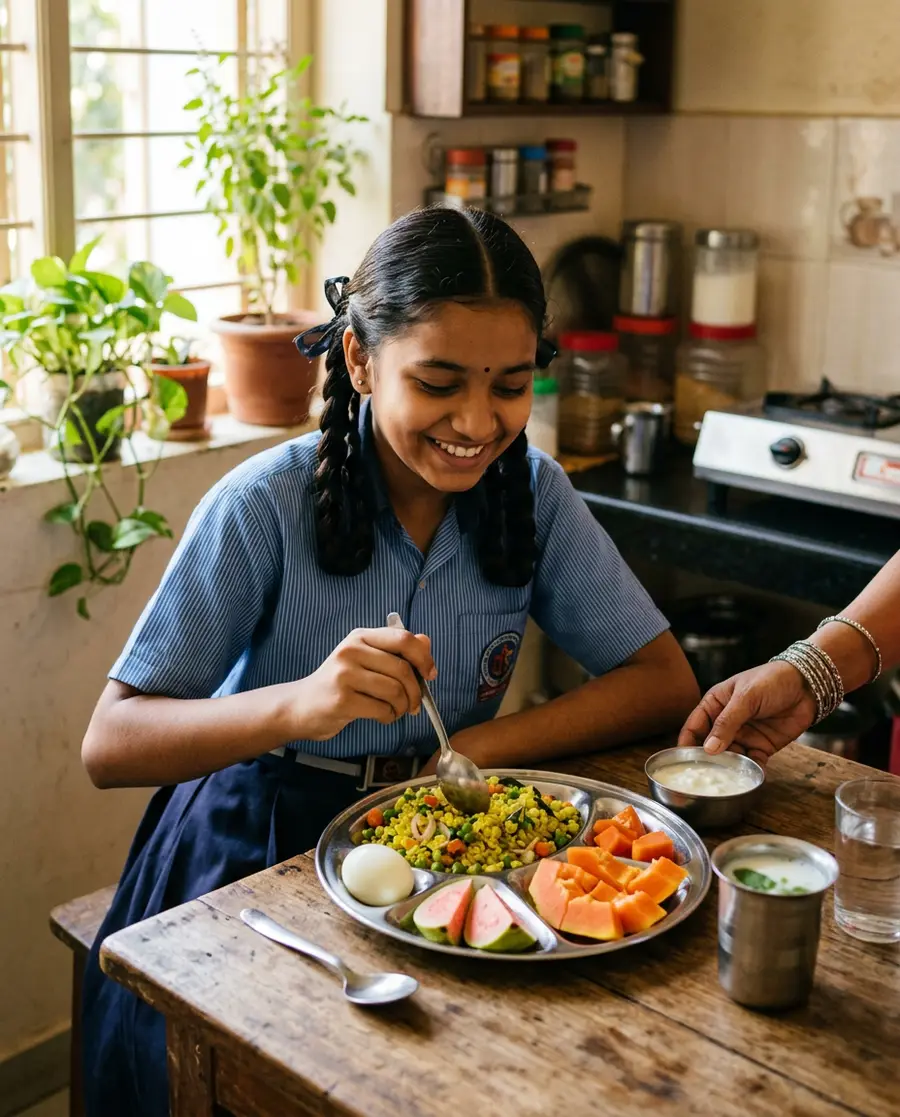
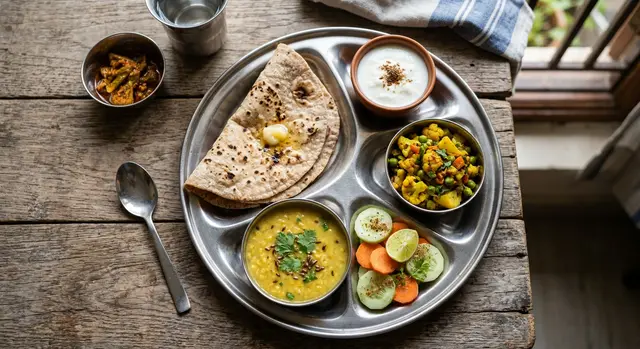
Not pills, not crash diets. The right Indian home food at the right time of day, planned by a professional nutritionist around your child’s age, BMI, allergies and routine.
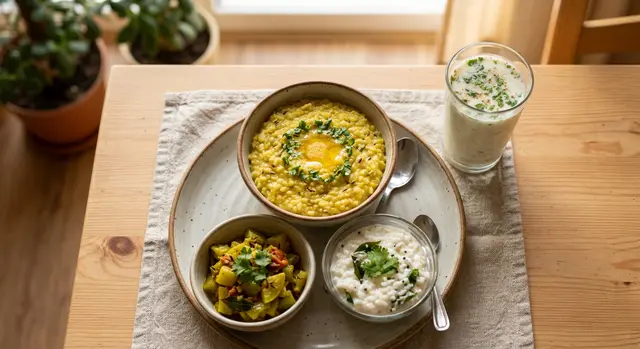
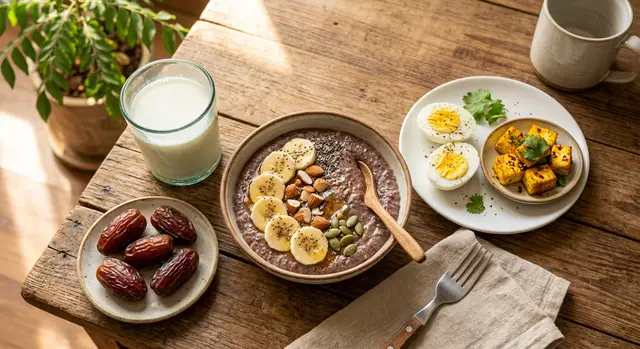
MorningA protein breakfast within an hour of wakingEgg, paneer, sprouts or a dal-based dish with a seasonal fruit — instead of biscuits and tea.
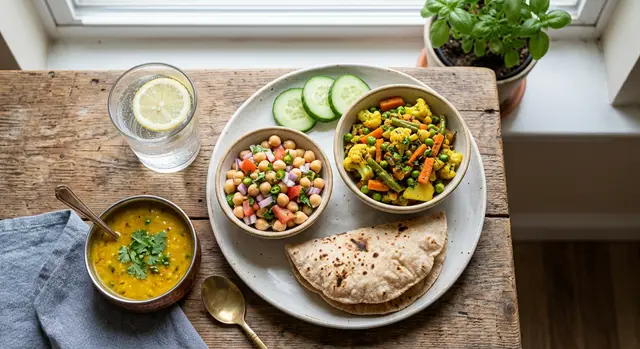
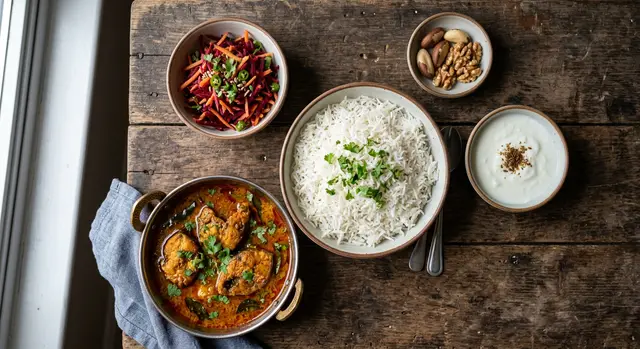
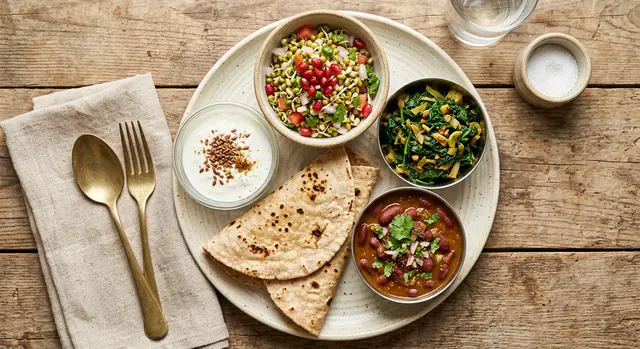
AfternoonA full home plateRice or roti with dal, a vegetable and curd. Millets like ragi and jowar a few times a week.
EveningA real snack at 4:30 PMRoasted chana, fruit, peanut chikki or buttermilk — so the packet does not win.
NightLight dinner, done by 8:30 PMTwo hours before bed, smaller portions, no fried food — better sleep, less acidity.
Plus 6–8 glasses of water on a schedule, and 30 minutes outdoors in the sun.
General wellness guidance, not a diagnosis. If your child has a diagnosed condition, our nutritionist works alongside your paediatrician and the medicines they prescribe.
How it works
Four steps, then dinner sorts itself.
1
Your child picks the foods
Breakfast 3–5 items, lunch 5–7, plus snack and dinner — from a full list of Indian and bread dishes. No carb repeats across meals.
2
The nutritionist plans
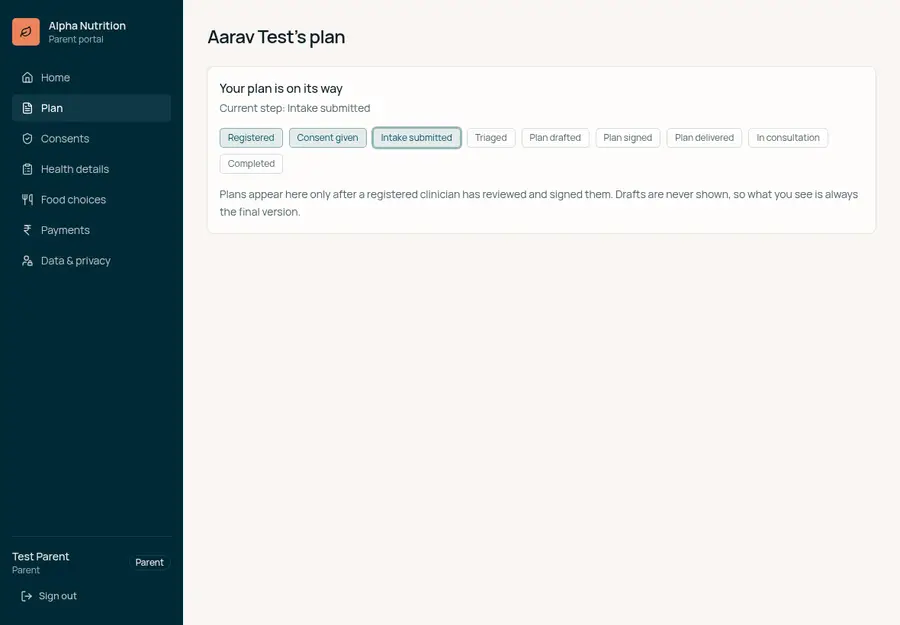
Age, height, weight, BMI, allergies, workouts and lifestyle set the daily intake. A professional nutritionist signs the plan.
3
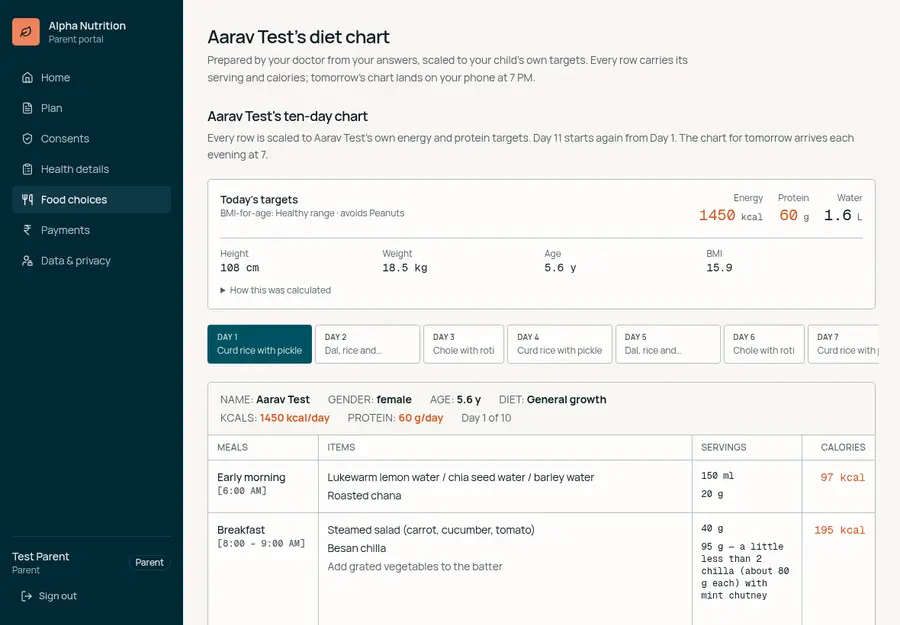
A menu every evening at 7 PM
Ten days are prepared at a time. Each evening tomorrow’s menu arrives with times, portions and water.
4
Need a change? Just reply
Reply to the menu email or ask in the portal. The nutritionist revises it and the menus carry on.
Good nutrition at the right age
The conditions arriving younger every year — treated with the right food, at the right time.
Diabetes, reflux, obesity, thyroid, PCOS and malnutrition are now routine findings in 11–16 year olds. Each one has a clinical diet behind it, and every menu we send carries the clock.
Millets and unpolished rice in place of white rice and maida; protein at every meal; fruit capped at 150 g with a protein alongside; no sugar, jaggery or honey.
GERD and gastritis
Small, frequent, low-acid meals
Soft, low-acid, lightly spiced meals. No chilli, pickle, papad, fried snacks or fizzy drinks; citrus and tomato only if tolerated.
Childhood obesity
Gentle deficit, high protein, high fibre
A gentle deficit, never a crash: salad before each main, oil capped at three teaspoons a day, high fibre and high protein so the child stays full.
Malnutrition and poor growth
Energy and protein dense, every two hours
Energy- and protein-dense food the child already accepts: an extra teaspoon of ghee or groundnut in each main meal, milk or a supplement mid-morning and at bedtime.
Thyroid
Iodine and selenium aware, steady energy
Iodised salt inside the 5 g limit, selenium from a Brazil nut or sunflower seeds daily, soy and raw cabbage, cauliflower and broccoli kept away from the medicine hour.
PCOS and PCOD
Insulin-friendly, anti-inflammatory
Insulin-friendly plates: protein and fibre with every carbohydrate, flax or pumpkin seeds daily, no packaged snacks, bakery or sweet drinks.
General wellness guidance, not a diagnosis. For a diagnosed condition our nutritionist works alongside your paediatrician and the medicines they prescribe.
Plans
One programme, three lengths.
Every plan starts the same way: a free intake, a nutritionist-signed plan, and your child choosing foods per meal. Pick how long you want the daily 7 PM menus to keep coming.
Payment is collected only after the nutritionist has signed your child’s plan. Online payment and WhatsApp delivery are being switched on; until then your dietitian confirms by email.
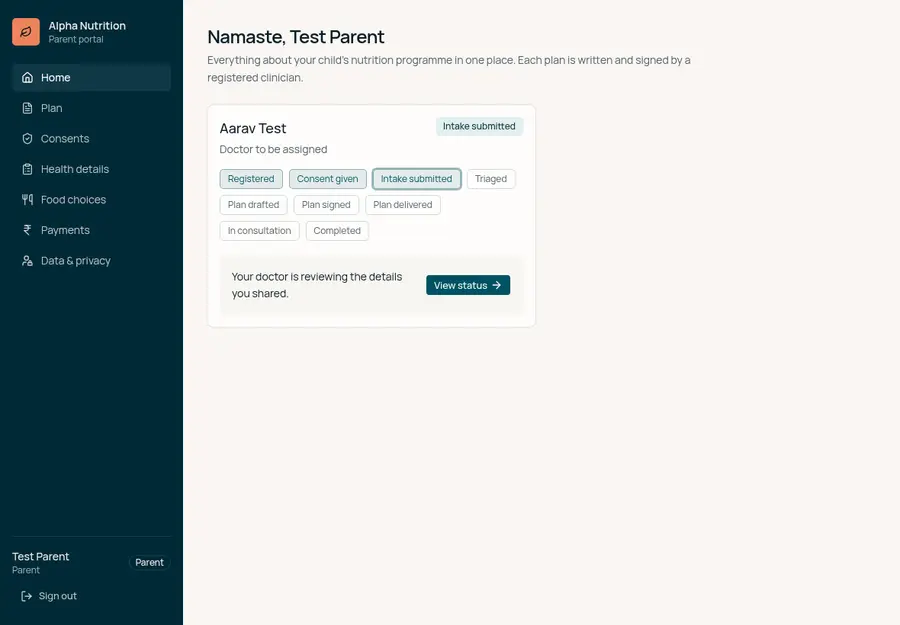
A team of postgraduate-qualified nutritionists, built around children.
We are a group of highly qualified nutritionists and dietitians, trained in paediatric nutrition and in dietary nutrition for medical conditions. Each of us brings a postgraduate qualification and more than four years of clinical practice to the plan your child receives.
Our team is recognised by NABH and IDA India. Registration numbers stay with each practitioner to protect their licences, and we verify them for schools and parents on request.
Every nutritionist holds an MSc or PG Diploma in nutrition and dietetics
4+ years
Of hands-on clinical practice behind each member of the team
Child and clinical
Paediatric nutrition and dietary (therapeutic) nutrition under one roof
Families
What changes is the evening, not just the plate.
Shared with permission, names withheld. We do not publish weights or measurements — children are not before-and-after photos.
“The first week she picked her own breakfast options from the list and actually ate them. The 7 PM message became our thing — she reads it out at dinner.”
“One is allergic to peanuts, the other is not. Two menus, same kitchen, nothing I had to remember. That alone was worth it.”
“Exam month used to mean biscuits and Maggi. This time the plan switched to exam-week menus by itself and the nutritionist checked in once.”
The intake is free. Plans run from ₹2,499 for 90 days to ₹7,999 for a full year, including GST. You pay only after the nutritionist has signed your child’s plan.
What is the 4-month lock?
Once your child’s food picks are submitted they stay fixed for 4 months, so the plan has time to work. Menus can still be revised on request at any time. After 4 months your child picks again.
My child is a fussy eater. Will they have to eat things they dislike?
No. Your child picks the dishes from the list, and only those dishes are used to build the menus. If something stops working, just ask for a revision.
Does this replace our doctor?
No. This is food-first wellness guidance. For a diagnosed condition our nutritionist works alongside your paediatrician and the medicines they prescribe.
How do I ask for a change?
Reply to the daily menu email, or send a request from the parent portal. The nutritionist revises the menus and they carry on as before.
Can I delete my account?
Yes, from the parent portal at any time. Deletion happens automatically after a 7-day grace period, and you can cancel it during that week.
Start with the free intake tonight.
Ten minutes. A nutritionist reads it within two working days.